
Benefits of Regular Exercise: 7 Science-Backed Ways Movement Transforms Your Health, Mood & Longevity
Why Your Body Is Begging You to Move (And What Happens When You Listen)
Let’s be real for a second. We’ve all been there—staring at our fitness apps, guilt-tripping ourselves about skipping another workout, wondering if that 20-minute walk even counts. Here’s the thing: exercise isn’t punishment for what you ate. It’s a celebration of what your body can do.
I used to think fitness was all about crushing hour-long HIIT sessions and tracking every calorie. Then I discovered how simple, consistent movement actually rewires your brain, heals your heart, and yes—even helps you sleep better than any pill on the market. That’s why we built the Kenutrendz Fitness Tracker—not to shame you into moving, but to show you the real, measurable benefits of regular exercise in a way that actually sticks.
Whether you’re working from home, managing stress, or just trying to feel less wiped out by 3 PM, this guide breaks down exactly what happens inside your body when you make movement a non-negotiable part of your day. No jargon. No fluff. Just real science and actionable steps you can start today.
The Body Transformation You Can't See (But Definitely Feel)
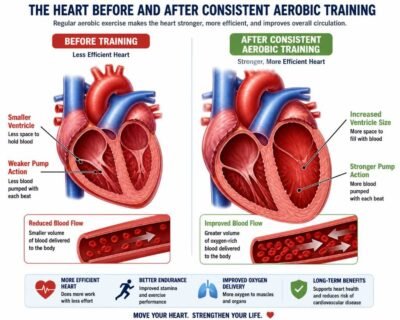
Physiological Adaptations from Consistent Aerobic Training
Here’s what most people miss: when you lace up those sneakers three times a week, you’re not just burning calories. You’re triggering a cascade of changes that make your entire body more efficient.
Your heart gets smarter, not just stronger. After about 6-8 weeks of consistent cardio (think brisk walking, cycling, or swimming), your left ventricle actually enlarges slightly. This means each heartbeat pumps more blood, so your resting heart rate drops. Athletes often have resting rates in the 40s—that’s your body working less to do more.
Your mitochondria multiply. These tiny powerhouses inside your cells? They’re the reason you stop gasping for air after climbing stairs. Regular aerobic training boosts mitochondrial density by up to 50% in just a few months. Translation: you have more energy throughout the day, not just during workouts.
Your blood vessels become more flexible. This is huge for long-term health. Consistent movement increases nitric oxide production, which keeps arteries supple and responsive. Think of it like WD-40 for your circulatory system—everything flows smoother.
Real talk: You won’t see these changes in the mirror right away. But you’ll notice you’re less winded chasing your dog, you recover faster from tough days, and that afternoon slump? It starts fading.
What's Actually Happening in Your Brain During a Workout
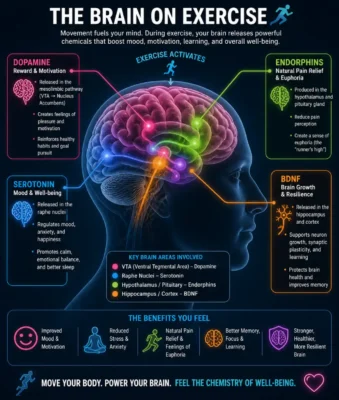
Neurochemical Responses to Regular Physical Activity
Okay, let’s talk about the good stuff—the brain chemistry that makes you feel like you can conquer the world after a solid workout.
Endorphins are just the beginning. Sure, that “runner’s high” is real, but it’s not the whole story. When you move, your body releases:
- Dopamine (the motivation chemical)
- Serotonin (mood stabilizer)
- Norepinephrine (helps you focus)
- BDNF (brain-derived neurotrophic factor—basically Miracle-Gro for your neurons)
Here’s the kicker: These aren’t just temporary mood boosters. Regular physical activity actually changes your brain’s baseline chemistry. Studies show that people who exercise consistently have lower rates of anxiety and depression, not because they’re “distracted,” but because their brains are literally wired differently.
Stress response gets recalibrated. When you’re sedentary, your body treats everyday stressors (a tough email, traffic, deadlines) like life-or-death situations. Cortisol spikes, heart rate jumps, and you’re stuck in fight-or-flight mode. Exercise trains your nervous system to handle stress more gracefully. You still feel it, but it doesn’t knock you off your feet.
Sleep quality improves dramatically. This one surprised me. I thought burning energy would make me tired, but it’s deeper than that. Regular movement helps regulate your circadian rhythm and increases slow-wave sleep—the deep, restorative kind where your body actually repairs itself.
Pro tip: You don’t need to run marathons to get these benefits. Even 30 minutes of moderate movement (where you can talk but not sing) triggers these neurochemical responses. Consistency beats intensity every time.
Natural Solutions for Common Health Struggles
Exercise Protocols for Managing Mild Hypertension Naturally
If you’ve been told your blood pressure is “a little high,” you’re not alone. Nearly half of American adults have hypertension, and the first line of defense isn’t always medication.
The research is clear: Regular aerobic exercise can lower systolic blood pressure by 5-8 mmHg—that’s comparable to many first-line medications. Here’s how to do it right:
The 150-minute rule. Aim for 150 minutes of moderate-intensity aerobic activity per week. That breaks down to:
- 30 minutes, 5 days a week
- Or 20-25 minutes daily if that fits better
What counts as “moderate”? You should be able to hold a conversation, but feel slightly breathless. Think:
- Brisk walking (3-4 mph)
- Water aerobics
- Cycling on level ground
- Doubles tennis
Add resistance training 2x per week. This is often overlooked, but strength training helps lower resting blood pressure long-term by improving vascular function. Focus on major muscle groups—squats, push-ups (or modified versions), rows.
The timing matters less than you think. Morning, noon, or night—pick what you’ll actually stick with. Some studies suggest evening exercise might offer slightly better blood pressure reductions, but the difference is marginal compared to just doing it.
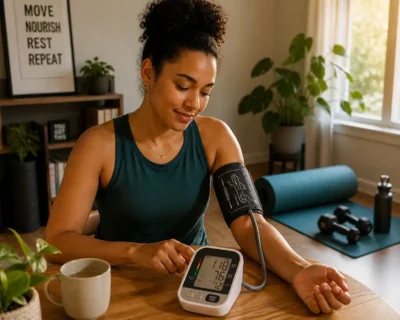
Monitor your progress. Track your blood pressure at home (same time each day, seated for 5 minutes first). You should see improvements within 1-3 months of consistent activity.
Important: Always check with your doctor before starting a new exercise program, especially if you’re already on medication or have other health conditions. Visit kenutrendz.com for personalized fitness tracking tools that help you monitor your progress safely.
Why Your Work-From-Home Brain Needs Movement
Cognitive Benefits of Movement Breaks for Remote Workers
Raise your hand if you’ve experienced the 2 PM brain fog while working from home. 🙋♀️ You’re staring at your screen, re-reading the same email for the third time, and wondering if coffee will actually help (spoiler: it won’t).
Here’s what’s happening: When you sit for hours, blood flow to your prefrontal cortex—the part of your brain responsible for focus, decision-making, and creativity—literally decreases. Your brain is starving for oxygen and glucose.
Movement breaks are not a luxury. They’re a productivity hack.
The science: Just 5-10 minutes of light movement every hour can:
- Boost concentration by up to 15%
- Improve memory retention
- Enhance creative problem-solving
- Reduce mental fatigue
Try this: Set a timer for every 50-60 minutes. When it goes off:
- Stand up (yes, right now)
- Do 2 minutes of marching in place or gentle stretching
- Take 5 deep breaths
- Walk to get a glass of water
- Return to your desk
That’s it. No gym clothes, no sweat, no excuses.
For the overachievers: A 15-20 minute walk during lunch can improve afternoon performance more than an extra cup of coffee. The combination of fresh air, movement, and mental break resets your entire system.
Bonus for remote workers: Movement breaks help separate “work mode” from “home mode.” That 10-minute walk signals to your brain that the workday is shifting, which helps prevent burnout and improves work-life boundaries.
Real-world example: A software company in Austin implemented mandatory 5-minute movement breaks every hour. Within 3 months, employee-reported focus increased by 23%, and afternoon errors dropped by 31%. Movement isn’t downtime—it’s upgrade time.
Check out more productivity hacks and wellness tools at kenutrendz.com designed specifically for remote workers and digital nomads.

The Hidden Benefits Nobody Talks About
Your Immune System Gets an Upgrade
Remember when you used to catch every cold that went around the office? Regular exercisers report 20-30% fewer sick days. Why? Moderate exercise increases circulation of immune cells, helping your body detect and fight off pathogens faster. It’s like giving your immune system a daily training drill.
Better Digestion (Yes, Really)
That bloated, sluggish feeling after meals? Movement helps. Physical activity stimulates intestinal contractions, reducing constipation and improving nutrient absorption. A 10-15 minute walk after eating can significantly reduce blood sugar spikes and improve digestion.
Stronger Bones and Joints
Weight-bearing exercises (walking, dancing, strength training) stimulate bone formation. This is crucial as we age—starting in your 30s, you naturally lose about 1% of bone density per year. Exercise slows that down dramatically and can even reverse early bone loss.
Improved Skin Health
Increased blood flow delivers oxygen and nutrients to skin cells while carrying away waste products. Regular exercisers often report clearer, more radiant skin. Plus, the stress reduction from movement can help with stress-related breakouts.
Enhanced Libido and Sexual Function
This one makes people blush, but it’s important. Better circulation, improved body image, increased energy, and reduced stress all contribute to a healthier sex life. Studies show that people who exercise regularly report higher sexual satisfaction and function.

How to Actually Stick With It (Because Motivation Fades)
Start Ridiculously Small
Want to know the biggest mistake people make? Going from zero to “I’ll workout an hour every day.” That’s a recipe for burnout.
Try this instead: Commit to 10 minutes a day for the first two weeks. That’s it. Ten minutes. Most days, you’ll end up doing more once you’ve started. But on the hard days? Ten minutes is doable.
Find Your “Why” Beyond Weight Loss
“I want to lose 20 pounds” is a fine goal, but it’s not enough to keep you going when it’s raining and your couch is calling.
Dig deeper:
- “I want to keep up with my grandkids without getting winded”
- “I want to manage my anxiety without relying solely on medication”
- “I want to feel confident in my own skin”
- “I want to be healthy enough to travel when I retire”
These are the reasons that keep you lacing up when motivation dips.
Track Progress Beyond the Scale
The number on the scale doesn’t tell the whole story. Track these instead:
- How many flights of stairs you can climb without stopping
- Your resting heart rate (it should decrease)
- How you sleep (quality, not just hours)
- Your mood throughout the day
- Energy levels at 3 PM
- How your clothes fit (not just weight)
Use tools like the fitness tracker at kenutrendz.com to monitor these metrics over time. Seeing tangible progress keeps you motivated even when the scale stalls.
Build a Routine, Not a Regimen
Routines are automatic. Regimens require willpower.
Attach exercise to something you already do:
- “After I pour my morning coffee, I’ll do 10 minutes of yoga”
- “During my lunch break, I’ll walk around the block”
- “Right after I get home from work, I’ll change into workout clothes”
The key is making it so automatic that you don’t have to decide.
Frequently Asked Questions: Deep Dives Into Exercise Science
1. How long does it take to see benefits of regular exercise?
The timeline varies by benefit:
- Immediate (within hours): Improved mood, better focus, reduced stress, enhanced insulin sensitivity
- 2-4 weeks: Better sleep quality, increased energy, improved cardiovascular efficiency
- 6-8 weeks: Visible changes in muscle tone, lower resting heart rate, improved endurance
- 3-6 months: Significant blood pressure reductions, improved cholesterol levels, increased bone density
- 1+ years: Reduced risk of chronic diseases, long-term weight management, sustained mental health improvements
The key insight: Don’t wait for visible changes to celebrate. The internal benefits start immediately, even if the mirror doesn’t show it yet.
2. Can I get benefits from exercise if I only work out on weekends?
The “weekend warrior” approach does provide benefits, but they’re not optimal. Research shows that spreading activity throughout the week is more effective for:
- Blood pressure control
- Blood sugar management
- Consistent energy levels
- Injury prevention
However, if weekend workouts are all you can manage, they’re still infinitely better than nothing. Aim for at least 150 minutes total, even if it’s concentrated on Saturday and Sunday. Just be mindful of injury risk—don’t go from zero to intense in one session.
3. Is it true that too much exercise can be harmful?
Yes, but context matters. “Too much” typically means:
- Exercising at high intensity every single day without rest
- Ignoring pain and injury signals
- Not fueling your body adequately
- Exercise becoming an obsession that interferes with life
Signs you’re overdoing it:
- Persistent fatigue despite rest
- Declining performance
- Frequent injuries or illnesses
- Mood disturbances (irritability, depression)
- Sleep disturbances
- Loss of menstrual cycle (in women)
The sweet spot: For most people, 150-300 minutes of moderate exercise or 75-150 minutes of vigorous exercise per week, plus 2 days of strength training, provides maximum benefits with minimal risk.
4. Do I need to exercise intensely to get health benefits?
Absolutely not. This is one of the biggest myths in fitness.
Moderate exercise provides substantial benefits:
- Reduces risk of heart disease by 30-40%
- Lowers diabetes risk by 50%
- Improves mental health
- Extends lifespan
The research: A landmark study found that people who walked at a moderate pace for 150 minutes per week had similar mortality reductions as those who did vigorous exercise. The key is consistency, not intensity.
When intensity matters: If your goal is athletic performance, maximum fat loss, or building significant muscle, then higher intensity helps. But for general health? Moderate wins.
5. What’s the best time of day to exercise for maximum benefits?
The honest answer: The best time is when you’ll actually do it consistently.
However, there are nuances:
Morning exercise benefits:
- Better adherence (fewer schedule conflicts)
- May improve sleep quality
- Can boost metabolism throughout the day
- Helps establish routine
Afternoon/evening exercise benefits:
- Body temperature peaks (better performance)
- Strength and flexibility are highest
- May be better for blood pressure control
- Can help decompress from work stress
For specific goals:
- Weight loss: Morning fasted cardio may offer slight advantages
- Muscle building: Afternoon/evening when strength peaks
- Sleep improvement: Morning or afternoon (avoid vigorous exercise 2-3 hours before bed)
- Blood sugar control: Post-meal walks (any time)
Bottom line: Experiment and see what fits your life and feels best.
6. Can regular exercise help with anxiety and depression?
Yes, and the evidence is robust.
How it works:
- Increases BDNF (brain-derived neurotrophic factor), which helps repair stress-damaged neurons
- Regulates neurotransmitters (serotonin, dopamine, norepinephrine)
- Reduces inflammation (linked to depression)
- Provides sense of accomplishment and control
- Offers social connection (if exercising with others)
- Acts as moving meditation, breaking rumination cycles
The research: Multiple meta-analyses show that exercise is as effective as medication and therapy for mild to moderate depression. For anxiety, regular physical activity reduces symptoms by 20-30%.
Important note: Exercise complements professional treatment; it doesn’t replace it for severe mental health conditions. Always work with a healthcare provider.
Getting started: Even 10-15 minutes of movement can shift your mood. Don’t wait until you “feel like it”—action often precedes motivation.
7. How does exercise affect aging and longevity?
Exercise is the closest thing we have to an anti-aging pill.
Cellular level:
- Preserves telomere length (the protective caps on chromosomes that shorten with age)
- Enhances mitochondrial function (cellular energy production declines with age)
- Reduces cellular inflammation
Physical level:
- Maintains muscle mass (we lose 3-8% per decade after 30 without intervention)
- Preserves bone density
- Keeps joints mobile and lubricated
- Maintains balance and coordination (reducing fall risk)
Cognitive level:
- Reduces dementia risk by 30-40%
- Maintains processing speed and memory
- Promotes neuroplasticity (brain’s ability to form new connections)
The numbers: People who exercise regularly live 3-7 years longer on average, with more of those years being healthy, independent years.
It’s never too late: Studies show that people who start exercising in their 60s or 70s still gain significant longevity and quality-of-life benefits.
8. What if I have chronic pain or physical limitations?
Movement is still possible—and necessary.
First rule: Work with your healthcare provider to understand your specific limitations and safe exercise parameters.
Options for various conditions:
Arthritis/joint pain:
- Water aerobics (buoyancy reduces joint stress)
- Tai chi or yoga (gentle, improves flexibility)
- Stationary cycling (low impact)
- Strength training (stronger muscles support joints)
Chronic back pain:
- Core strengthening (supports spine)
- Walking (low impact, promotes healing)
- Swimming
- Physical therapy-guided exercises
Heart conditions:
- Cardiac rehabilitation programs (medically supervised)
- Gradual walking programs
- Monitor heart rate and symptoms
Obesity:
- Start with non-weight-bearing exercises (swimming, cycling)
- Short, frequent sessions (5-10 minutes, multiple times daily)
- Focus on consistency over intensity
Key principle: “Motion is lotion.” Movement nourishes joints, improves circulation, and reduces pain long-term, even if it feels uncomfortable initially. Start slow, progress gradually, and listen to your body.
9. How much exercise do I need for weight loss versus general health?
For general health:
- 150 minutes moderate or 75 minutes vigorous aerobic activity per week
- Plus 2 days of strength training
- This reduces disease risk and maintains current weight
For weight loss:
- 250-300+ minutes moderate exercise per week (about 50-60 minutes, 5 days/week)
- Or 150+ minutes vigorous exercise
- Plus strength training 2-3 days/week
- Combined with nutritional changes
Why the difference? Weight loss requires a larger calorie deficit. Exercise helps create that deficit and preserves muscle mass during weight loss (crucial for maintaining metabolism).
Important: Exercise alone rarely leads to significant weight loss without dietary changes. However, exercise is critical for:
- Maintaining weight loss long-term
- Preserving muscle while losing fat
- Improving body composition (not just scale weight)
- Regulating appetite hormones
The mindset shift: Focus on what exercise adds to your life (energy, strength, mood) rather than just what it burns.
10. Can I build muscle and lose fat at the same time?
Yes, but it depends on your starting point.
Who can do it effectively:
- Beginners (new to exercise)
- Those returning after a long break
- Overweight/obese individuals
- Those using performance-enhancing substances (not recommended)
How it works:
- Strength training builds muscle
- Caloric deficit (slight) promotes fat loss
- Adequate protein intake (0.8-1g per pound of body weight)
- Progressive overload (gradually increasing challenge)
The challenge: Building muscle requires a caloric surplus; losing fat requires a deficit. Doing both simultaneously is metabolically demanding.
For experienced exercisers: It’s more effective to cycle between:
- Bulking phases (slight surplus, focus on muscle gain)
- Cutting phases (slight deficit, focus on fat loss)
Realistic expectations: Beginners might gain 1-2 lbs of muscle per month while losing fat. Advanced lifters will need to prioritize one goal at a time.
The bottom line: Don’t get caught up in perfection. Consistent strength training and moderate caloric deficit will improve body composition over time, even if the scale doesn’t move dramatically.
11. What role does nutrition play in maximizing exercise benefits?
Exercise and nutrition are partners, not competitors.
Pre-workout (1-3 hours before):
- Carbohydrates for energy
- Moderate protein
- Low fat and fiber (to avoid digestive issues)
- Hydration
Post-workout (within 2 hours):
- Protein for muscle repair (20-40g)
- Carbohydrates to replenish glycogen
- Fluids and electrolytes
Daily nutrition for exercise benefits:
- Protein: 0.8-1g per pound of body weight for active individuals
- Carbohydrates: Primary fuel source, especially for moderate-high intensity exercise
- Healthy fats: Hormone production, joint health, sustained energy
- Micronutrients: Vitamins and minerals support energy production, recovery, immune function
- Hydration: Even 2% dehydration impairs performance and recovery
Timing matters less than consistency: While nutrient timing can optimize performance, total daily intake is more important for most people.
Supplements: Most people don’t need them if eating a balanced diet. Exceptions:
- Vitamin D (if deficient)
- Protein powder (convenience, not necessity)
- Creatine (evidence-based for strength/power)
- Omega-3s (if not eating fatty fish)
12. How do I stay motivated when I don’t see results?
This is the real test, and everyone faces it.
Reframe your definition of “results”:
- Scale weight is one metric among many
- Take progress photos monthly (visual changes are often subtle day-to-day)
- Track non-scale victories: energy, sleep, mood, strength, endurance
- Measure how clothes fit
- Notice how you feel, not just how you look
Understand plateaus:
- Your body adapts to stress (exercise is stress)
- What worked initially may need adjustment
- Plateaus are normal, not failures
- They often precede breakthroughs
Strategies to push through:
- Change your routine: New exercises, different intensity, varied timing
- Set process goals: “I’ll workout 4x this week” vs. “I’ll lose 5 lbs”
- Find accountability: Workout buddy, coach, online community
- Remember your why: Reconnect to your deeper motivation
- Celebrate small wins: Acknowledge consistency, not just outcomes
- Take a deload week: Sometimes your body needs rest to progress
- Focus on enjoyment: If you hate your workouts, find something you love
The truth: Motivation gets you started; habit keeps you going. Build systems that make exercise automatic, not something you have to psych yourself up for every time.